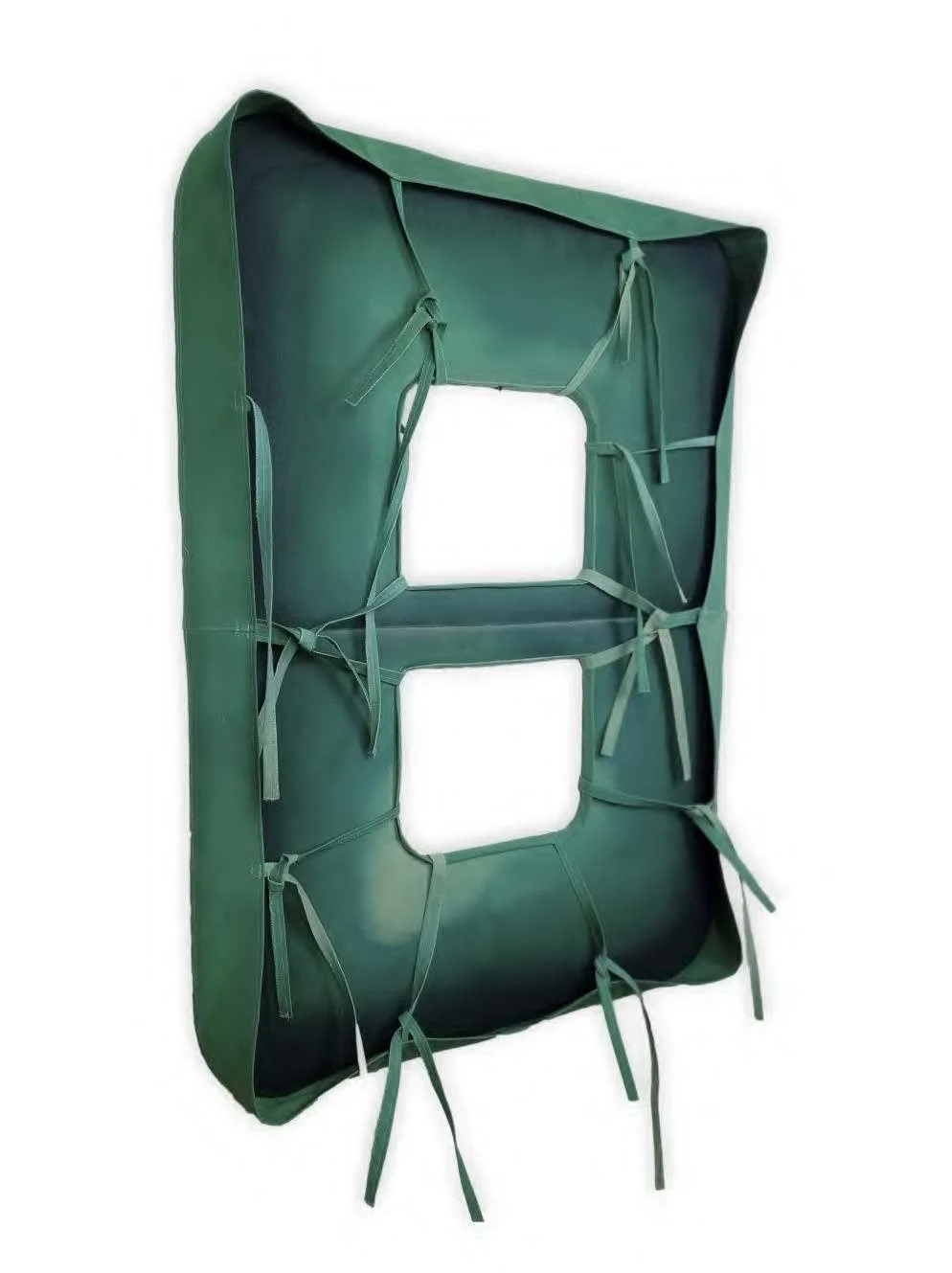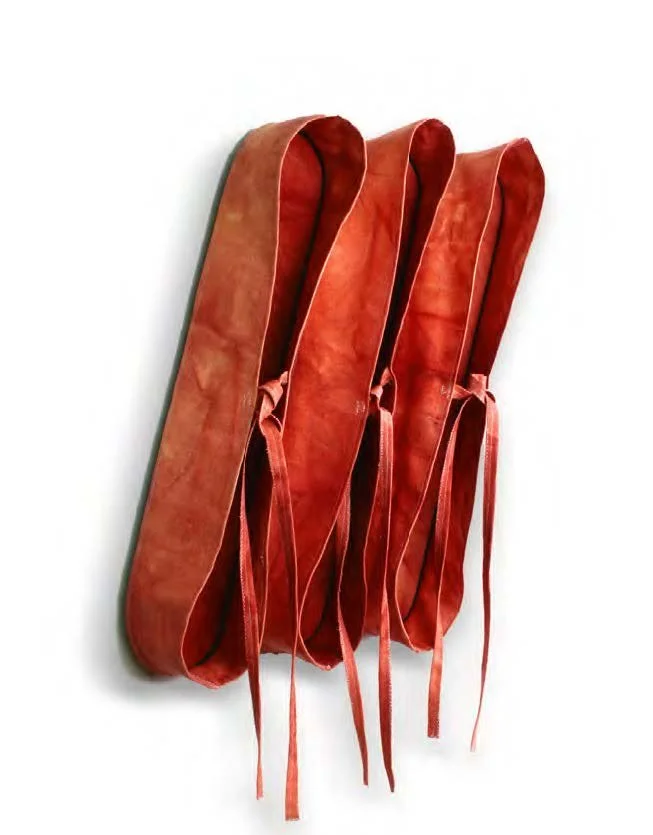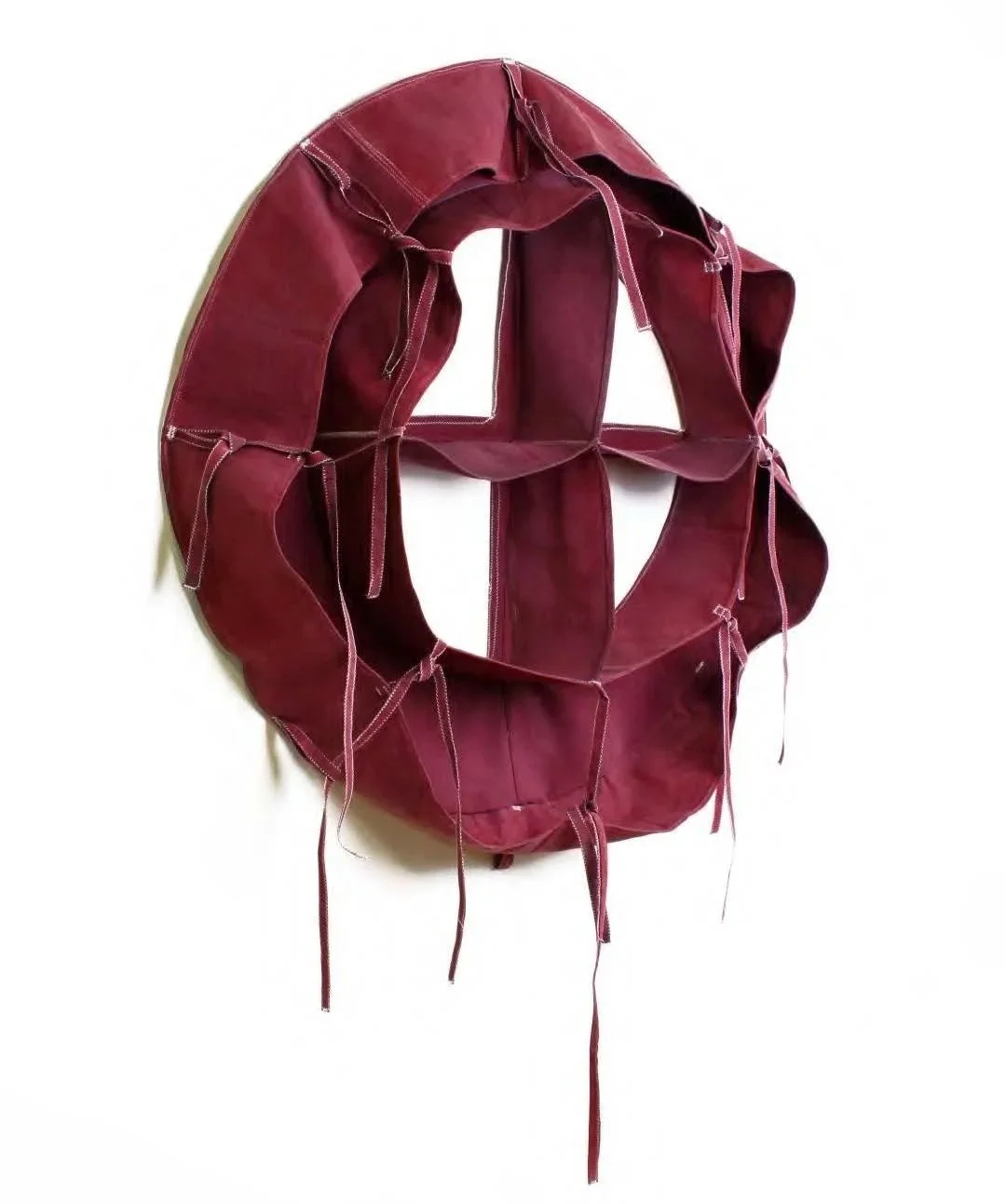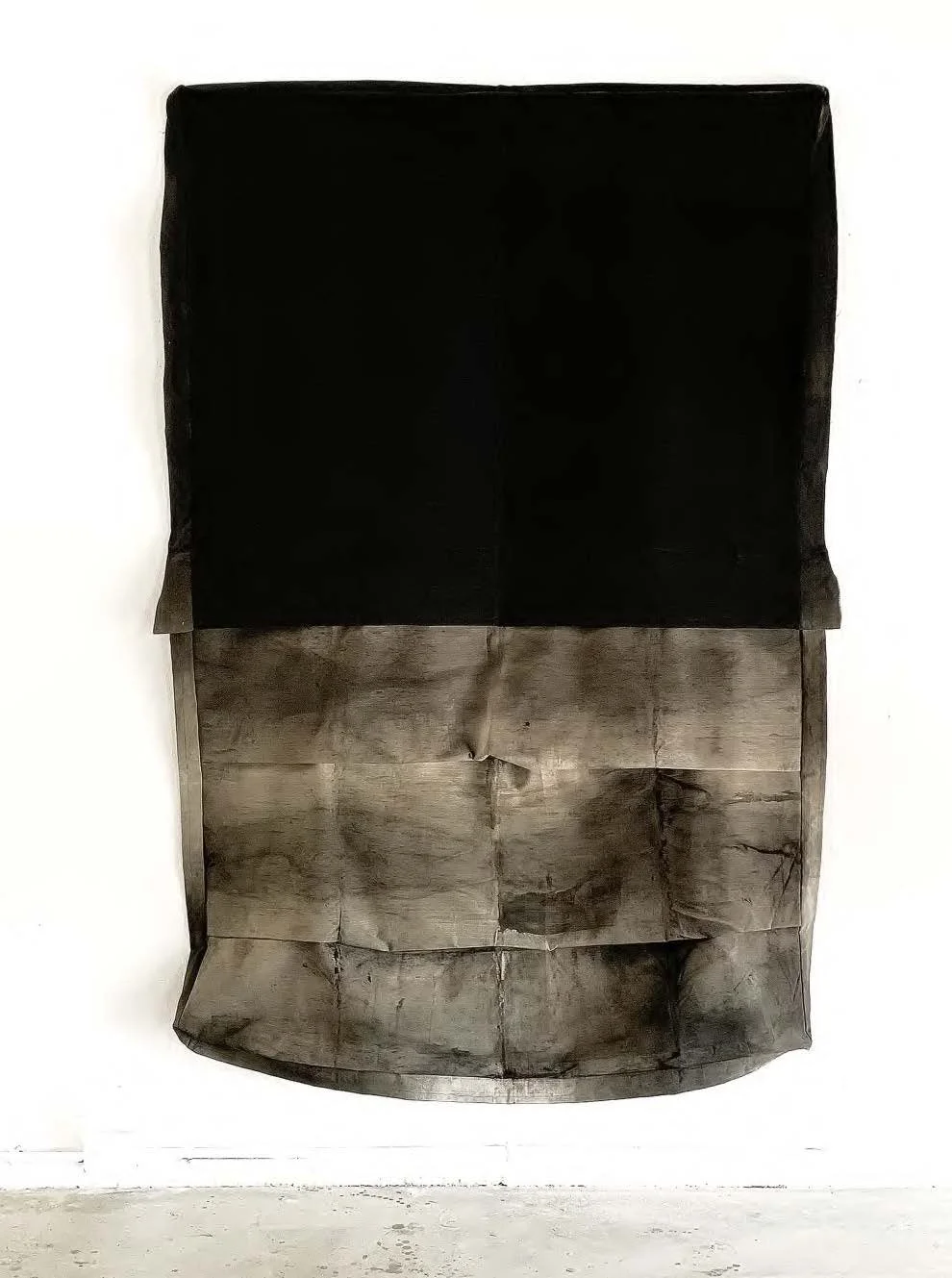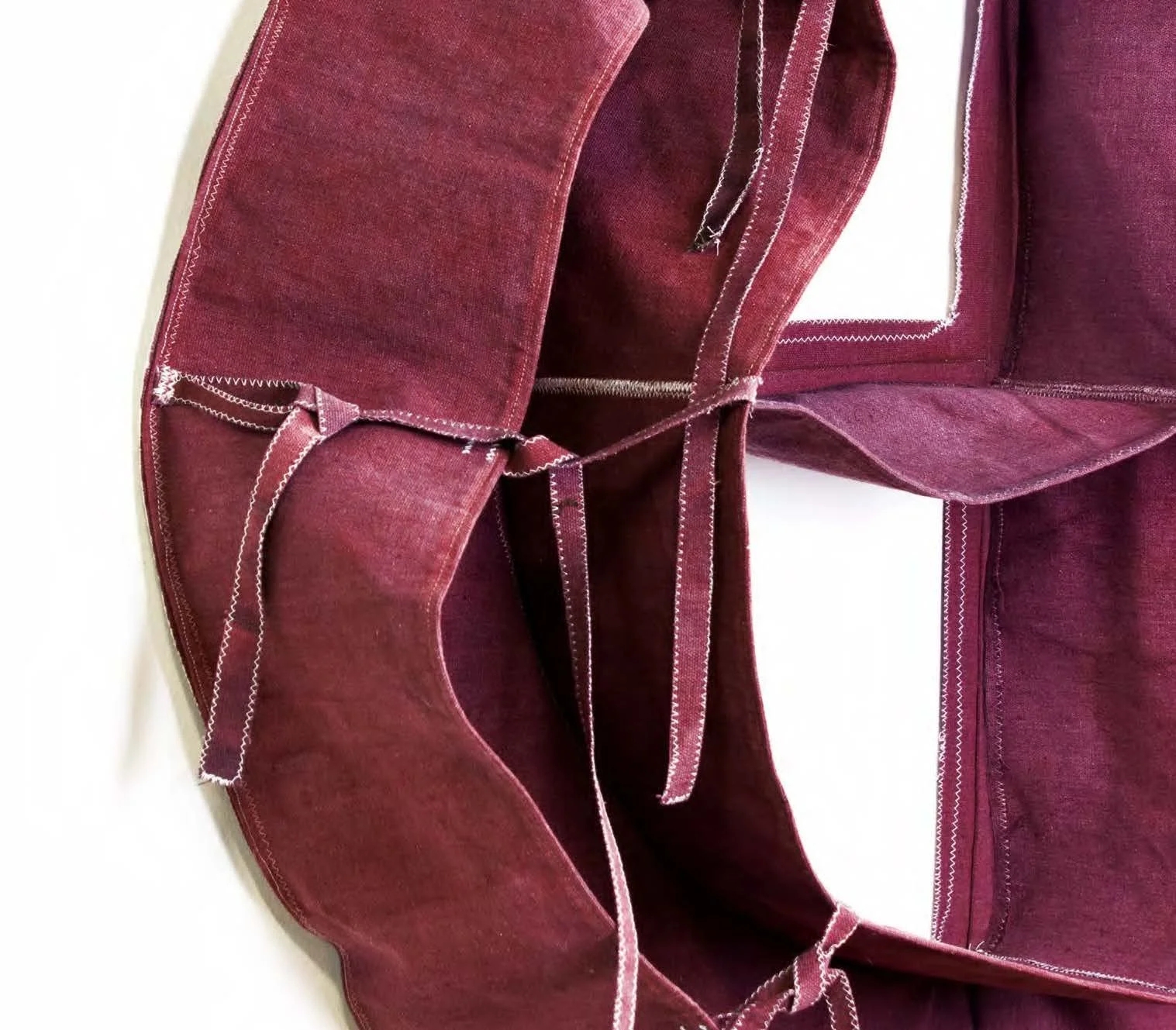
Jamie Poblete (b. 1981, Santiago, Chile) is a visual artist whose practice explores painting as a spatial and material process, where gesture, surface, and time intertwine. Working primarily with folded and sewn textiles, pigments, ashes, salts, and acrylic resin, he develops works that function as living surfaces—porous, tactile, and open to transformation. His practice unfolds through an ongoing dialogue between color, matter, and memory, in search of a balance between structure and fluidity, presence and absence.
He studied Scenography and Art Theory at the Universidad de Chile, and also worked as a scenographer in collaboration with several theatre companies. Between 2002 and 2007, he worked as a restorer at the Museo de Arte Contemporáneo (MAC) in Santiago. From 2008 to 2010, he lived and worked in Valencia, Spain, where he attended the Academia de San Carlos at the Universidad Politécnica de Valencia.
Since 2011, he has been based in Italy, where he has developed a visual language that investigates the relationship between matter, identity, and perception. Recent solo exhibitions include Edén Ulmo (Dep Art, Ceglie Messapica, 2024), Edén (Aldo Chaparro Studio, Mexico City, 2022), Pliegue (G/ART/EN, Como, 2020), and Nigredo (Suburbia Contemporary, Granada, 2019). Selected group exhibitions include Corpo a Corpo (Fondazione Como Arte, 2025), Rosa Alchemico (Fondazione Miniartextil, Como, 2022), Trame (Folini Arte, Lugano, 2023), Montagne Sacre (ARTRA, Milan, 2023), and Gucci Art Program #2 (Milan Montenapoleone, 2023).
“My work originates from a reflection on the surface as a threshold between body, memory, and territory. I do not consider fabric a mere support, but a sensitive field: a skin that absorbs, retains, and returns traces of time. Through successive pigment immersions and exposure to sunlight, air, and atmospheric agents, color becomes an exercise in memory. It settles, alters, reacts, allowing matter to register what occurs.
Folding constitutes the central gesture of this research. To fold is to bring the plane to the limit of its fragility and allow it to become form: to withdraw visibility, to create a cavity, to establish an interior that remains partially inaccessible. It is a gesture that generates shadow, compression, gravity; a way of revealing, within the same surface, both protection and exposure. In this oscillation between inside and outside, the surface approaches the skin — understood as both psychic and physical boundary — and stitching assumes the character of a primary form of writing.
The work allows ritual genealogies and archaic images related to weaving to surface, without fixing them as categorical references: the knot as memory, the weave as tactile grammar, vertical structures as devices of connection between different dimensions. The fold may thus be understood as threshold and articulation — a gesture that relates distinct layers of experience without reducing them to a single interpretation.
In this process, color is structure. Black, born from combustion and ash, operates as a germinal condition: a fertile nigredo that absorbs light in order to redistribute it within matter. Oxidized ranges — copper greens, earthy reds, mineral greys — carry a geological and political memory: landscapes marked by extraction, by the friction between resource and loss, between promise and the consumption of territory.
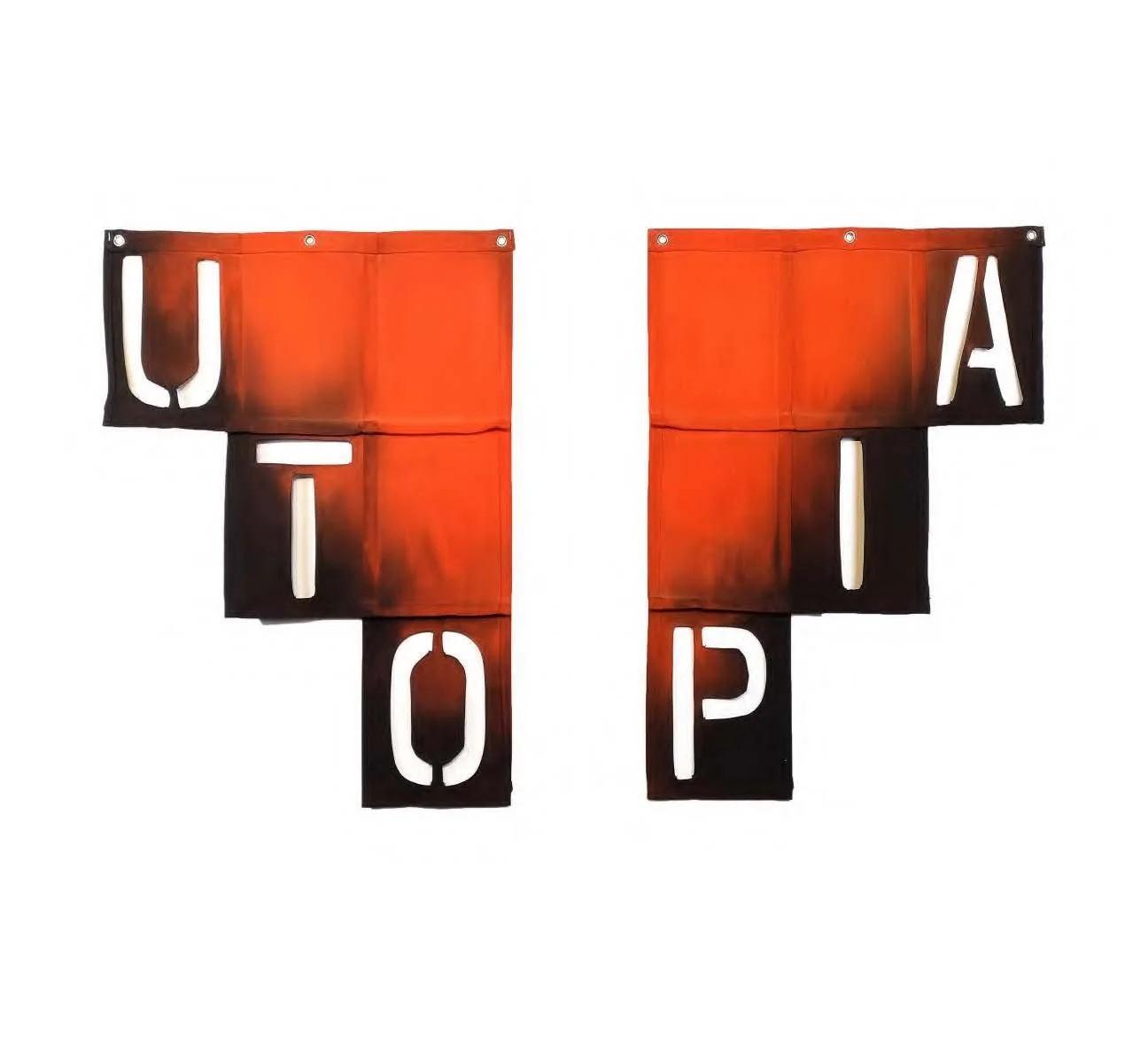
Forms often assume the verticality of a banner, yet suspend its rhetoric. In certain works, language appears frontally — EDEN, HUMAN, UTOPIA — inscribed in the fabric as a declaration rendered into vulnerable matter. The text is not a slogan: it is a body exposed to the gravity of its support. The fall of the fabric distorts and destabilizes meaning itself, revealing its political and symbolic fragility. The banner does not proclaim; it folds.
The gravity of the fabric introduces fall and vulnerability: form becomes body. It remains in tension, as if continually negotiating between resistance and surrender. Painting thus unfolds as a spatial and phenomenological event — not an image to contemplate, but a presence that occurs. A surface that breathes and holds time, folds onto itself, and remains in tension.”